
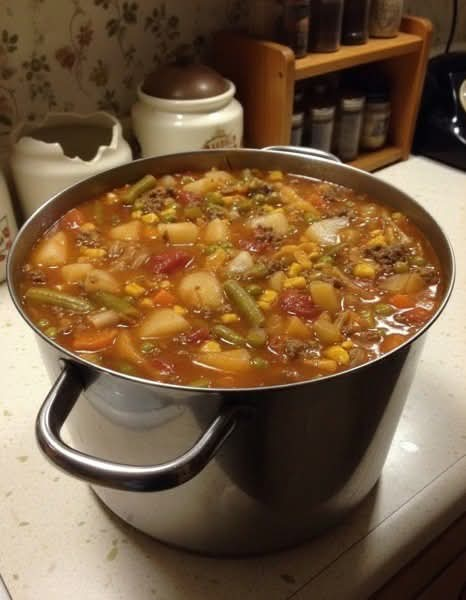
Why You’ll Love This Recipe
- One-pot preparation: Brown the beef and simmer the soup in the same pot.
- Everyday ingredients: Ground beef, canned tomatoes, potatoes, and frozen vegetables keep shopping straightforward.
- Hearty portions: Beef and potatoes make the soup filling.
- Flexible vegetables: Use your favorite frozen blend or suitable fresh vegetables.
- Good for leftovers: Refrigerate or freeze portions for another meal.
Ingredients You’ll Need
Ground Beef
Use 1 pound of ground beef.
Lean ground beef gives the soup savory flavor with less excess fat. If using a higher-fat variety, drain thoroughly after browning.
Break the meat into small crumbles so it distributes throughout the broth.
Onion and Garlic
One medium diced onion and two minced garlic cloves create the aromatic base.
Cook the onion with the beef, then add the garlic briefly before pouring in the liquids. This gives the garlic time to become fragrant without burning.
Beef Broth
Use 3 cups of beef broth.
Low-sodium broth makes it easier to control the salt level. Keep a little extra available if you prefer a thinner soup or need more liquid during reheating.
Diced Tomatoes
Add one 15-ounce can of diced tomatoes, including the juices.
The tomatoes provide texture and acidity, while their liquid becomes part of the broth.
Tomato Sauce
One cup of tomato sauce gives the soup a fuller tomato flavor and a little more body.
Use plain canned tomato sauce rather than ketchup.
Potatoes
Use two medium potatoes, diced into roughly ½-inch pieces.
Yukon Gold potatoes hold their shape well, while russets soften more and can slightly thicken the broth. Peel them if desired, especially if the skins are thick.
Frozen Mixed Vegetables
Use 2 cups of frozen mixed vegetables.
A blend of carrots, peas, corn, and green beans works well. Add them directly from frozen toward the end of cooking.
Herbs and Seasonings
You’ll need:
- 1 teaspoon dried basil
- 1 teaspoon dried oregano
- ½ teaspoon salt, or to taste
- ½ teaspoon black pepper
The salt needed depends on your broth and canned tomatoes. Start conservatively and adjust after simmering.
How to Make Vegetable Beef Soup
1. Brown the Beef and Onion
Place a large soup pot or Dutch oven over medium heat.
Add the ground beef and diced onion. Cook, breaking the beef into crumbles, until the meat is browned and the onion has softened.
Drain excess grease.
2. Add the Garlic
Stir in the minced garlic and cook for about 1 minute, stirring frequently.
3. Build the Soup
Add the beef broth, undrained diced tomatoes, tomato sauce, diced potatoes, basil, oregano, salt, and pepper.
Stir well, scraping any browned bits from the bottom of the pot into the broth.
4. Simmer the Potatoes
Bring to a boil, then reduce the heat to maintain a gentle simmer.
Cook for approximately 20 minutes, stirring occasionally, until the potatoes begin to soften.
Keep the pot partially covered if the liquid is reducing too quickly.
5. Add the Frozen Vegetables
Stir in the frozen mixed vegetables.
Return to a gentle simmer and cook for 10–15 minutes, until the vegetables and potatoes are tender. Add more broth if needed to reach your preferred consistency.
6. Adjust and Serve
Taste the broth and adjust the seasoning.
Remove from the heat and let stand for 5 minutes before ladling into bowls.
Tips for the Best Results
Cut the Potatoes Evenly
Similar-sized pieces finish cooking at the same time. Large chunks may need longer than the suggested simmering time.
Use Tenderness as Your Guide
Tomatoes can slow the softening of potatoes, so check with a fork rather than relying only on the clock. Continue simmering if the centers are still firm.
Keep the Simmer Gentle
A steady, gentle simmer cooks the vegetables without breaking them apart or reducing the broth too quickly.
Add Frozen Vegetables Near the End
They need less cooking than raw potatoes. Adding them later helps preserve their color and texture.
Adjust the Broth to Taste
This is a chunky soup. Add extra broth for a lighter consistency or simmer uncovered briefly for a more concentrated result.
Season After Simmering
The broth becomes more concentrated as it cooks. Taste at the end before adding more salt.
Easy Variations
Fresh Vegetable Beef Soup
Replace the frozen blend with chopped fresh vegetables. Add firmer vegetables, such as carrots and celery, with the onion or potatoes. Add quick-cooking vegetables, such as peas or zucchini, toward the end.
Ground Turkey Vegetable Soup
Replace the beef with ground turkey. The flavor will be lighter, so adjust the herbs and seasoning as needed.
Bean and Beef Soup
Stir in a drained, rinsed can of kidney beans or white beans during the final simmer. Add extra broth if the soup becomes too thick.
Spicy Vegetable Beef Soup
Add a pinch of crushed red pepper flakes with the dried herbs.
Pasta Variation
Cook small pasta separately and add it to individual bowls before ladling in the soup. Keeping pasta separate prevents it from absorbing too much broth during storage.
What to Serve with Vegetable Beef Soup
Crusty bread, dinner rolls, or cornbread are simple accompaniments for soaking up the broth.
A green salad adds a fresh contrast, while a grilled cheese sandwich makes the meal more substantial. The soup is also hearty enough to serve on its own.
Make-Ahead Tips
Prepare the soup a day ahead, refrigerate promptly, and reheat gently before serving.
You can also dice the onion and measure the herbs ahead of time. If cutting potatoes in advance, keep them covered with cold water in the refrigerator, then drain before adding to the pot.
Storage and Reheating
Refrigerate leftovers promptly in covered containers for up to 3–4 days.
Reheat in a saucepan over medium-low heat, stirring occasionally, until hot throughout. Add broth or water if the soup has thickened.
Freezing
Freeze cooled soup in freezer-safe containers for up to 3 months, leaving room for expansion.
Thaw overnight in the refrigerator before reheating. Potatoes may become softer or slightly grainy after freezing.
Frequently Asked Questions
Can I add the frozen vegetables without thawing?
Yes. Stir them directly into the simmering soup and allow it to return to a simmer before checking the remaining cooking time.
Do I drain the diced tomatoes?
No. Add the tomatoes and their juices.
Can I use canned vegetables?
Yes. Drain them first and add near the end, heating just until warmed through because they are already cooked.
Why are my potatoes still firm?
The pieces may be large, or the tomato-rich broth may be slowing their softening. Continue simmering gently and add liquid if needed.
Can I use water instead of broth?
Broth provides much of the savory flavor. Water can be used, but the soup will need additional seasoning or an appropriate amount of beef bouillon.
How can I thicken the soup?
Mash a few cooked potato pieces against the side of the pot and stir them into the broth. Alternatively, simmer uncovered briefly to reduce the liquid.
Is the calorie count exact?
No. Calories depend on the fat content of the beef, the vegetable blend, and the specific packaged ingredients. Treat any nutrition figure as an estimate.