
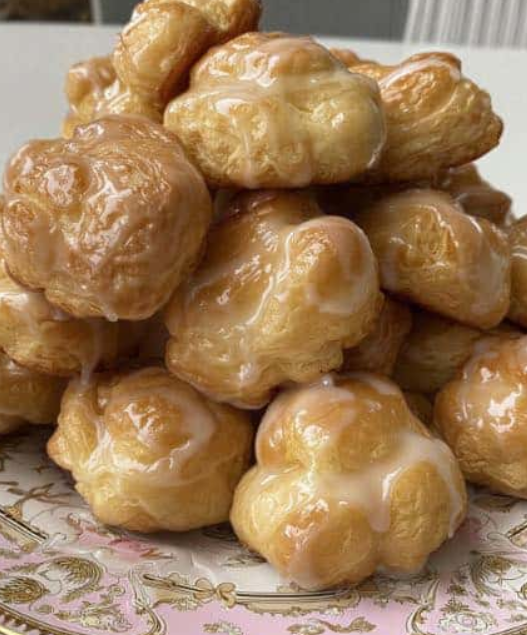
Why You’ll Love This Recipe
- Rich coffee flavor: Espresso balances the sweetness of the cream and caramel.
- Contrasting textures: Tender pastry and smooth filling meet a crisp sugar coating.
- Impressive presentation: Small cream puffs become a celebration centerpiece.
- Preparation in stages: Make the filling and shells ahead.
- Individual portions: Guests can enjoy a few filled puffs each.
Ingredients You’ll Need
Choux Pastry
The pastry uses:
- 1 cup all-purpose flour
- ½ cup unsalted butter
- 1 cup water
- ¼ teaspoon salt
- 4 large eggs
Choux pastry starts as a cooked flour paste. Eggs are added afterward, creating a dough that expands in the oven and forms hollow centers.
The exact amount of egg needed can vary slightly. Beat the final egg separately and add gradually, checking the dough’s consistency.
Espresso Pastry Cream
The filling contains:
- 2 cups whole milk
- 2 tablespoons instant espresso powder
- 4 large egg yolks
- ½ cup granulated sugar
- 2 tablespoons cornstarch
- ¼ cup unsalted butter
- 1 teaspoon vanilla extract
Use instant espresso powder that dissolves in liquid, rather than ground coffee.
This proportion of cornstarch produces a relatively soft pastry cream. Chill it thoroughly before piping, and avoid overfilling the shells.
Caramel
Use:
- 1 cup granulated sugar
- ½ cup water
The water helps dissolve the sugar before cooking away. Once the syrup boils, avoid stirring so the caramel is less likely to crystallize.
How to Make Espresso Crème Croquembouche
1. Make the Espresso Pastry Cream
Prepare the filling first so it has time to chill.
Heat the milk and espresso powder in a saucepan until steaming, stirring to dissolve the powder.
In a heatproof bowl, whisk the egg yolks, sugar, and cornstarch until smooth. Slowly whisk in about half the hot milk, then return everything to the saucepan.
Cook over medium heat, whisking continuously, until thickened and bubbling. Continue whisking at a gentle bubble for about 1 minute.
Remove from the heat and stir in the butter and vanilla. Strain if necessary for a smoother texture.
Spread into a shallow container, press food-safe plastic wrap directly against the surface, and refrigerate promptly until completely cold, approximately 3 hours.
2. Prepare the Oven
Preheat the oven to 400°F (200°C).
Line two baking sheets with parchment paper. If desired, draw evenly spaced circles on the underside as piping guides.
3. Cook the Choux Paste
Combine the water, butter, and salt in a saucepan. Bring to a boil, making sure the butter has melted.
Add the flour all at once. Stir vigorously until a cohesive dough forms.
Continue cooking over medium-low heat for 1–2 minutes, stirring, until the dough pulls away from the sides and leaves a thin film on the saucepan.
4. Add the Eggs
Transfer the paste to a mixing bowl. Stir or beat briefly to release steam, then let cool for a few minutes so it is warm rather than very hot.
Beat in three eggs individually, mixing thoroughly after each addition.
Beat the fourth egg in a small bowl and add gradually. Stop when the dough is smooth, glossy, and falls slowly from a lifted spatula in a thick V shape. You may not need every drop.
5. Pipe the Puffs
Transfer the dough to a piping bag fitted with a large round tip.
Pipe approximately 30–36 mounds, about 1¼ inches wide, leaving roughly 2 inches between them. Smooth pointed tips with a lightly dampened fingertip.
6. Bake Until Dry and Golden
Bake for 15 minutes at 400°F (200°C).
Without opening the door, reduce the temperature to 350°F (175°C) and continue baking for approximately 15–25 minutes, until deeply golden and firm.
Avoid opening the oven early, which can cause the developing shells to collapse.
Pierce the side or bottom of each baked puff with a small knife to release steam. If the interiors are still moist, return the shells to the oven briefly to dry, then cool completely on a rack.
Bake in batches if your oven does not heat two trays evenly.
7. Fill the Puffs
Stir the chilled pastry cream gently until smooth.
Transfer to a piping bag fitted with a small filling tip. Pipe through a small opening in the bottom of each shell, filling modestly without forcing the pastry apart.
Keep filled puffs refrigerated while preparing the caramel.
8. Cook the Caramel
Place the sugar and water in a clean saucepan. Stir over low heat until the sugar dissolves.
Bring to a boil and stop stirring. Cook until the syrup turns a medium amber color, gently swirling the pan if necessary.
Remove from the heat and let the bubbling settle briefly. Hot caramel causes serious burns; keep fingers clear and handle the puffs with suitable utensils.
9. Build the Tower
Use a stable, heatproof serving platter.
Dip a small area on the side of a puff into the caramel and place it on the platter. Repeat to form a broad base.
Build smaller layers above, using caramel at the contact points to join the puffs. Let each section set before adding more weight.
Keep the tower modest in height. If the caramel becomes too thick, warm it gently over low heat until workable.
10. Serve Soon After Assembly
Allow the caramel to harden, then serve promptly.
Use serving utensils to separate portions carefully. The crisp caramel gradually softens as it absorbs moisture from the filling and surrounding air.
Tips for the Best Results
Chill the Filling Fully
Warm pastry cream is difficult to pipe and softens the shells quickly.
Judge the Dough Before Adding All the Egg
A runny dough spreads instead of holding its shape. Add the final egg gradually.
Bake the Shells Thoroughly
Pale shells often contain too much moisture and may collapse. Look for a firm exterior and a deep golden color.
Keep the Puffs Similar in Size
Even portions bake more consistently and make stacking easier.
Prepare the Assembly Area First
Have the platter, filled puffs, utensils, and a heatproof surface ready before cooking caramel.
Assemble Close to Serving
A finished croquembouche is sensitive to moisture. Prepare the components ahead, then fill and stack near serving time.
Optional Variations
Milder Coffee Filling
Reduce the espresso powder to 1 tablespoon for a gentler flavor.
Vanilla Cream Puffs
Omit the espresso powder for a vanilla version.
Chocolate Finish
Add a light drizzle of melted dark chocolate after the caramel has set. Let the chocolate cool slightly before applying.
Cream Puff Platter
For simpler serving, arrange the filled puffs on a platter and add a little caramel to each one instead of building a tower.
Make-Ahead and Storage
Pastry Cream
Prepare up to 2 days ahead and keep covered in the refrigerator, with wrap touching the surface.
Unfilled Shells
Bake a day ahead and keep completely cooled shells airtight at room temperature. Recrisp briefly in a 300°F (150°C) oven if needed, then cool before filling.
Unfilled shells can also be frozen for up to 1 month for best quality.
Filled and Assembled Dessert
Keep filled puffs refrigerated and assemble close to serving. Do not leave the cream-filled dessert at room temperature for more than 2 hours.
Refrigerate leftovers, preferably separated into individual puffs, and enjoy within 1–2 days. Expect softer pastry and sticky caramel.
Frequently Asked Questions
Why did my choux pastry collapse?
The shells may have been underbaked, the dough may have contained too much egg, or the oven door may have opened before the structure set.
Why is my pastry cream loose?
It may need more chilling or may not have cooked sufficiently after thickening. This recipe also makes a softer filling than versions containing more starch.
Can I use brewed espresso?
Brewed espresso adds liquid and is not a direct replacement for the powder in this formula.
Why did my caramel become grainy?
Undissolved sugar or crystals on the pan can encourage crystallization. Dissolve the sugar before boiling and avoid stirring afterward.
Can I refrigerate the finished tower overnight?
That is unlikely to preserve its appearance or crunch. Refrigerator moisture softens caramel, so store the components separately and assemble shortly before serving.