
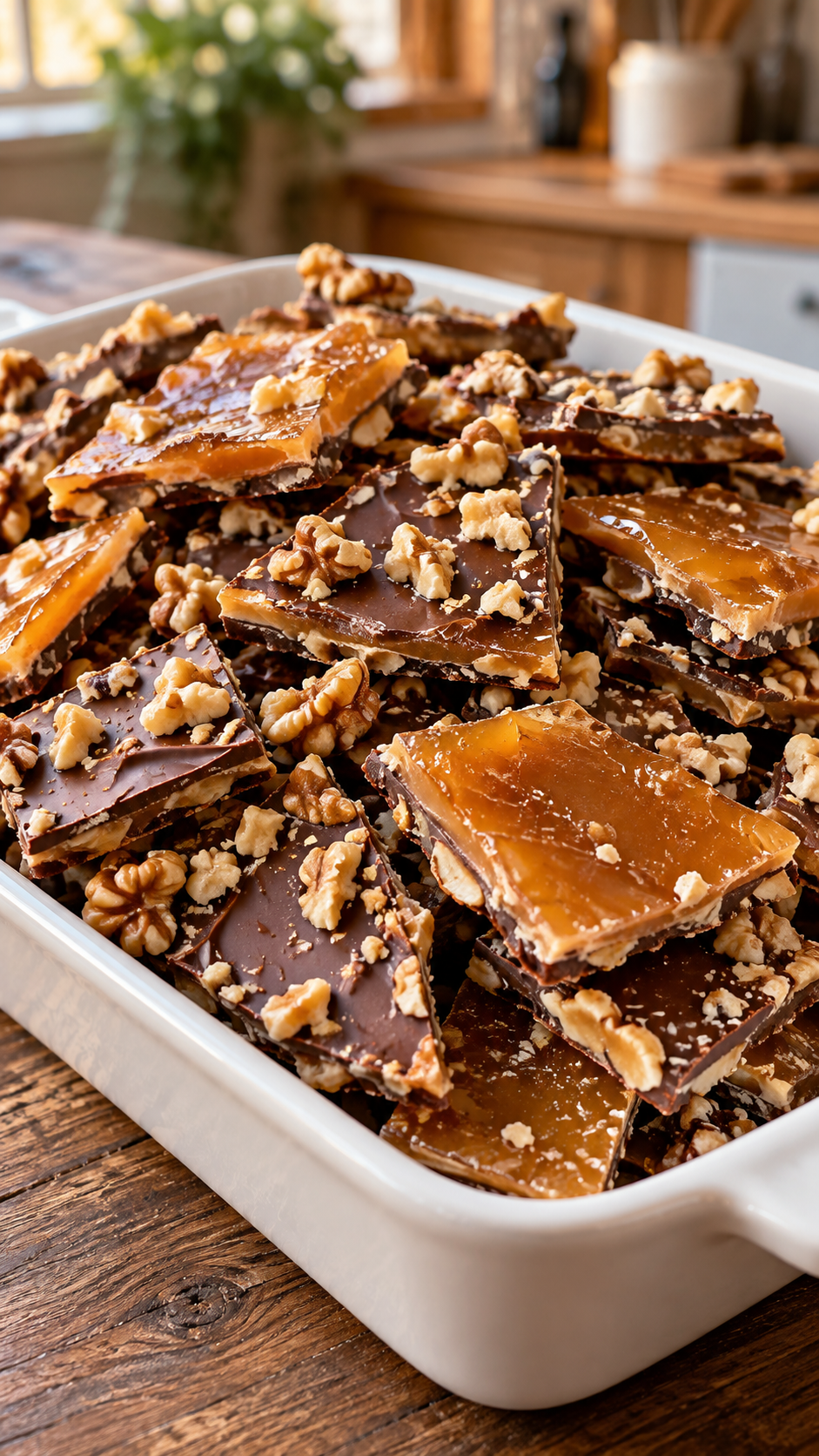
Why You’ll Love This Chocolate Walnut Toffee
- Rich caramel flavor: Butter and two types of sugar create a deeply flavored candy.
- Contrasting textures: Crisp toffee pairs with smooth chocolate and crunchy walnuts.
- Simple ingredients: Just five ingredients are needed.
- Easy presentation: Irregular pieces look attractive on dessert platters.
- Suitable for gifting: Firm pieces pack neatly into lined candy tins.
What Is Chocolate Walnut Toffee?
Toffee is a cooked candy made by heating butter and sugar until the mixture reaches a temperature that produces a firm, brittle texture after cooling.
In this version, walnuts and semisweet chocolate chips form the bottom layer. The freshly cooked toffee is poured over them, melting and settling into the chocolate and nuts.
The finished candy should have a crisp bite rather than a soft, chewy caramel texture. Despite its name, “melt-in-your-mouth” describes its buttery richness rather than a soft consistency.
Ingredients You’ll Need
Butter
Use 1 pound of butter, equal to 2 cups or 454 grams. Butter supplies the candy’s rich flavor.
Unsalted butter gives you more control over saltiness. If you use salted butter, expect a slightly saltier finish. Avoid substituting spreadable butter or reduced-fat spreads, which contain different amounts of water and fat.
Granulated Sugar
One cup of granulated sugar contributes sweetness and helps form the crisp candy structure.
Brown Sugar
One cup of packed brown sugar adds molasses flavor and a deeper color. Light brown sugar provides a milder flavor, while dark brown sugar gives a stronger molasses note.
Walnuts
One cup of chopped walnuts adds crunch throughout the chocolate layer. Chop them into small, fairly even pieces so the finished toffee is easier to break and eat.
Semisweet Chocolate Chips
Two cups of semisweet chocolate chips balance the sweet toffee. Choose chocolate you enjoy eating because its flavor will remain prominent.
Equipment You’ll Need
Have all your equipment ready before heating the sugar:
- A heavy-bottomed saucepan with plenty of room for bubbling
- A candy thermometer
- A heatproof spoon or spatula
- A 9-by-13-inch metal baking pan
- Parchment paper
Hot toffee must be poured promptly, so prepare the pan and clear a heat-resistant landing area first.
How to Make Chocolate Walnut Toffee
1. Prepare the Chocolate and Walnut Layer
Line a 9-by-13-inch metal baking pan with parchment paper, leaving enough overhang to lift out the finished candy.
Scatter the chopped walnuts and chocolate chips evenly over the bottom. Set the pan near your cooking area, away from the burner.
2. Melt the Butter and Sugars
Combine the butter, granulated sugar, and packed brown sugar in the saucepan.
Heat over medium-low, stirring gently until the butter melts and the mixture is evenly combined. Avoid rushing this stage with high heat.
3. Cook to the Hard-Crack Stage
Bring the mixture to a steady boil. Position the candy thermometer so its sensing tip sits in the mixture without touching the bottom of the pan.
Continue cooking until it reaches 300°F (150°C). Watch closely, particularly near the end, and stir gently as needed to prevent scorching.
The cooking time is approximately 15–20 minutes, but temperature is the more reliable guide. Pan size, burner strength, and starting ingredient temperatures can all affect the timing.
4. Pour the Toffee
Immediately remove the saucepan from the heat when the mixture reaches the target temperature.
Carefully pour the hot toffee over the chocolate chips and walnuts, distributing it as evenly as possible. The heat will soften the chocolate beneath it.
Avoid touching or tasting the hot candy.
5. Let It Set
Leave the pan undisturbed until the toffee and chocolate are completely firm, approximately two hours. A warm kitchen may increase the setting time.
If the toffee is cool but the chocolate remains soft, refrigerate briefly to firm it.
6. Break into Pieces
Lift the cooled candy from the pan using the parchment overhang. Break it into small, irregular pieces.
The yield will vary with the size of the pieces; plan on approximately 40.
Tips for Better Homemade Toffee
Use Temperature Rather Than Color Alone
Brown sugar makes this mixture dark from the beginning. A thermometer is more useful than color for judging when it is ready.
Keep the Thermometer Off the Pan Bottom
Contact with the metal can give an inaccurate reading. Check its position before the mixture becomes too hot to adjust comfortably.
Maintain Steady Heat
Avoid sudden changes in burner temperature. Controlled, even cooking helps reduce scorching and separation.
Use a Heavy Saucepan
A thin pan can develop hot spots that burn the sugar before the rest of the mixture reaches the correct temperature.
Prepare the Pan First
Once the toffee is ready, it continues cooking in the hot saucepan. Having the chocolate and walnuts arranged beforehand lets you pour promptly.
Let Everything Firm Completely
The toffee may harden before the chocolate does. Wait until both layers are firm before lifting and breaking the candy.
Flavor Variations
Pecan Chocolate Toffee
Replace the walnuts with an equal amount of chopped pecans for a slightly different nut flavor.
Dark Chocolate Walnut Toffee
Use dark chocolate chips for a less sweet chocolate layer.
Milk Chocolate Toffee
Choose milk chocolate for a sweeter, creamier contrast to the buttery candy.
Lightly Salted Toffee
If using unsalted butter, a small sprinkle of flaky salt over the freshly poured toffee can add contrast. This is an optional addition to the original recipe.
Keep the butter and sugar quantities unchanged when experimenting with chocolate or nuts.
Serving and Gift Ideas
Arrange small pieces on a candy platter alongside cookies, fudge, or chocolate-covered fruit.
For gifts, place the completely set toffee in food-safe tins or boxes with parchment between layers. Keep the containers away from heat so the chocolate stays firm.
Because this candy contains walnuts and dairy, include that information when sharing it.
How to Store Chocolate Walnut Toffee
Store the completely cooled toffee in an airtight container in a cool, dry place for up to two weeks. Separate layers with parchment to prevent sticking.
If your kitchen is warm, refrigerate the candy in a tightly sealed container. Let the container approach room temperature before opening to help limit condensation.
For longer storage, freeze well-wrapped toffee in an airtight container for up to two months. Thaw while still sealed.
Frequently Asked Questions
Why is my toffee chewy?
It may not have reached the hard-crack stage. Use a candy thermometer and check that the mixture reaches 300°F (150°C) before removing it from the heat.
Why did the butter separate?
Separation can occur when the mixture heats unevenly or experiences sudden temperature changes. Use a heavy pan, melt the ingredients gently, and maintain steady heat.
Why is my toffee grainy?
Sugar crystallization can create a grainy texture. Start with clean equipment, combine the ingredients thoroughly during melting, and avoid scraping dried sugar from the sides of the pan into the boiling mixture.
Can I put the chocolate on top instead?
Yes. Scatter the walnuts in the lined pan, pour the cooked toffee over them, and sprinkle the chocolate chips over the hot surface. Let the chips soften, then gently spread them into a layer before cooling.
Do I need to toast the walnuts?
No. The recipe works with untoasted walnuts. If you prefer a toasted flavor, toast them separately and let them cool before arranging them in the pan.
Can I use a different pan size?
Changing the pan size changes the candy’s thickness. A larger pan produces thinner pieces, while a smaller pan creates thicker pieces that can be harder to bite. The specified 9-by-13-inch pan gives a consistent starting point.