
Why You’ll Love This Recipe
- Only four ingredients: No chocolate, marshmallows, or condensed milk required.
- Rich brown sugar flavor: Butter and vanilla complement the sugar’s molasses notes.
- Small batch: An 8-inch square pan makes 16 small portions.
- Simple equipment: A heavy saucepan, candy thermometer, and wooden spoon are enough.
- Easy to share: Cut the fully set fudge into squares for a candy plate or gift box.
What Is Poor Man’s Caramel Fudge?
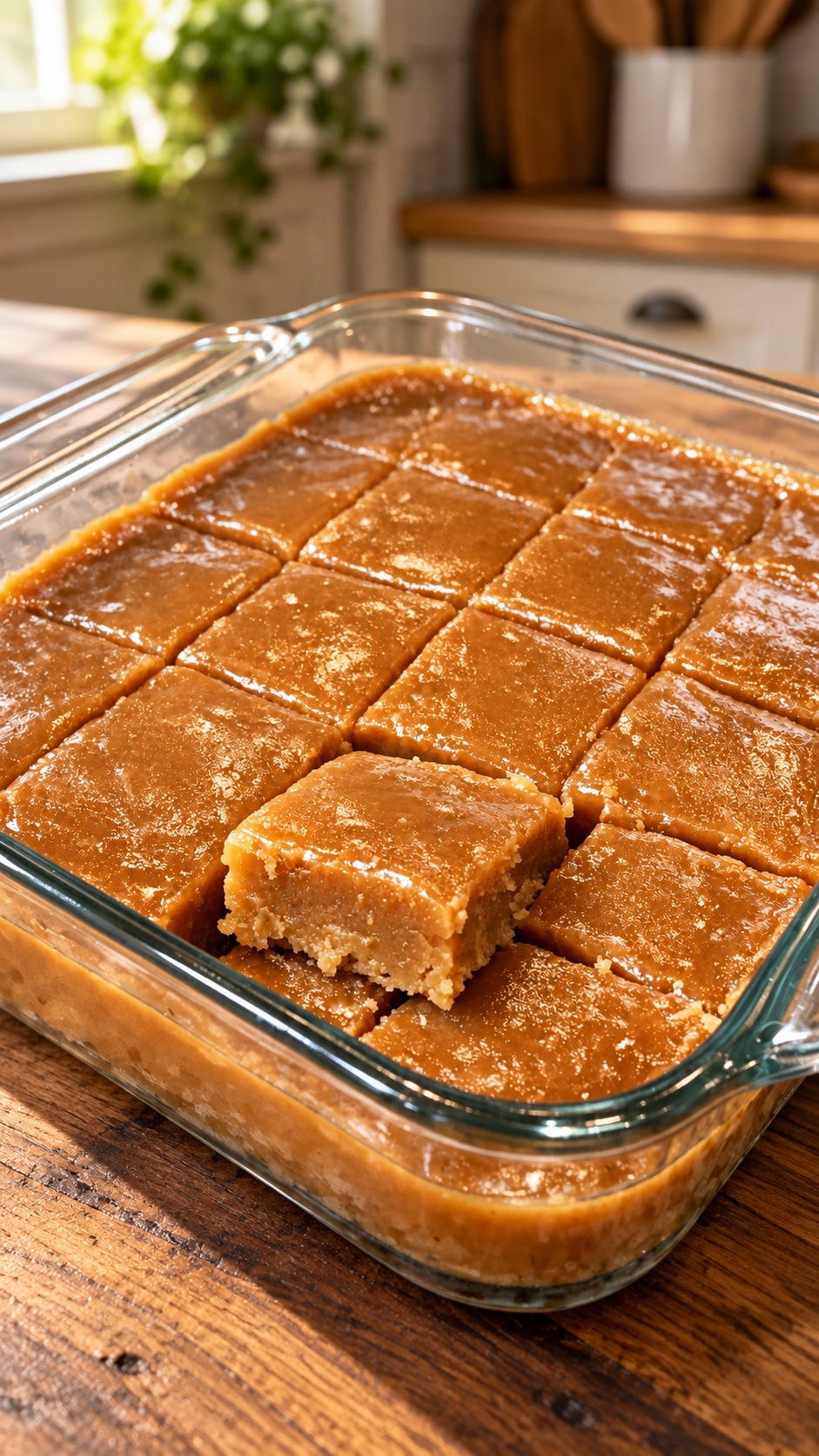
This recipe is a traditional-style brown sugar fudge. Its caramel-colored appearance and buttery flavor come primarily from brown sugar rather than a separate caramel-making step.
The finished candy should be firm enough to slice, with a tender bite and a fine, creamy texture. Controlled cooking and cooling help create the small sugar crystals that give fudge its characteristic consistency.
Ingredients You’ll Need
Brown Sugar
Use two cups of packed brown sugar. Light brown sugar gives a milder flavor, while dark brown sugar produces a stronger molasses taste.
Whole Milk
Half a cup of whole milk helps dissolve the sugar and contributes richness. Measure carefully because the liquid amount affects cooking and setting.
Butter
Four tablespoons of butter add flavor and tenderness. Use a little extra to grease the pan.
Vanilla Extract
One teaspoon of vanilla rounds out the flavor. Add it after removing the saucepan from the heat, taking care because the hot mixture may bubble.
How to Make Caramel Fudge
1. Prepare the Pan
Butter an 8-inch square pan. Alternatively, line it with parchment and lightly butter the lining.
Have the pan ready before cooking. Once beaten, fudge can firm quickly.
2. Dissolve the Sugar
Combine the brown sugar, milk, and butter in a heavy saucepan over medium-low heat.
Stir steadily until the butter melts and the sugar dissolves. Avoid leaving dry sugar around the sides of the saucepan.
3. Cook to the Soft-Ball Stage
Bring the mixture to a gentle, steady boil. Position a candy thermometer with its sensing tip in the mixture without touching the pan’s bottom.
Cook to approximately 238°F (114°C), within the soft-ball range of 234–240°F. Once the sugar has dissolved and the mixture is boiling, avoid unnecessary stirring or scraping sugar crystals from the sides into the candy.
Watch closely and reduce the heat if needed to prevent scorching.
4. Cool Undisturbed
Remove the saucepan from the heat. Add the vanilla carefully, then leave the mixture undisturbed until it cools to approximately 110°F (43°C).
Cooling can take considerably longer than 5–10 minutes. Use the temperature rather than a short fixed resting time as your guide. Beating while the mixture is too hot can produce coarse, grainy fudge.
5. Beat Until Thick and Creamy
Beat with a wooden spoon until the mixture thickens and begins losing its glossy appearance.
Stop when it is creamy and thick but still spreadable. Immediately transfer to the prepared pan and smooth gently.
6. Let Set and Slice
Allow the fudge to cool completely and become firm before cutting into 16 squares.
Tips for Better Homemade Fudge
Use a Heavy Saucepan
A heavy base distributes heat more evenly and reduces hot spots that can scorch the milk and sugar.
Dissolve the Sugar Before Boiling
Stir thoroughly during the initial warming stage so the mixture is smooth before it reaches a steady boil.
Measure Temperature Carefully
A thermometer touching the bottom of the pan can give a misleading reading. Keep the sensing tip properly positioned in the candy.
Cool Before Beating
This is one of the most important steps. Letting the mixture cool undisturbed helps produce a finer texture when beaten.
Watch the Change in Gloss
The fudge becomes thicker and less shiny as it approaches the spreading stage. Have the prepared pan nearby so you can transfer it promptly.
Avoid Scraping Crusty Residue into the Pan
Dried sugar around the saucepan’s sides can introduce coarse crystals into the finished fudge.
Optional Variations
Walnut fudge: Fold a small handful of chopped walnuts into the thickened fudge just before transferring it to the pan.
Pecan fudge: Use chopped pecans for a buttery crunch.
Lightly salted fudge: Sprinkle a little flaky salt over the surface before it sets.
These additions are optional and increase the ingredient count.
Serving and Gift Ideas
Serve small squares with coffee or tea, or arrange them alongside cookies and other homemade candies.
For gifts, place fully set pieces in a food-safe container with parchment between layers. Keep the container away from heat and moisture.
Storage
Store fully cooled fudge in an airtight container in a cool, dry place for up to one week. Refrigerate if your kitchen is warm, allowing pieces to soften briefly before serving.
For longer storage, wrap tightly and freeze in an airtight container for up to two months. Thaw while wrapped to limit condensation.
Frequently Asked Questions
Why didn’t my fudge set?
The mixture may not have reached the correct cooking temperature, or it may not have been beaten enough after cooling. Accurate temperature readings help avoid a soft result.
Why is my fudge grainy?
Undissolved sugar, crystals introduced from the pan’s sides, or beating while too hot can create a coarse texture.
Why did it harden before I could spread it?
It may have been overcooked or beaten past the spreadable stage. Transfer it as soon as it thickens and begins losing its shine.
Can I make it without a thermometer?
The cold-water test can help identify the soft-ball stage, but a thermometer makes both cooking and cooling easier to judge. A small drop of cooked syrup should form a soft ball in cold water that flattens when removed.
Does dark brown sugar work?
Yes. It gives a stronger molasses flavor and darker color.
Is this the same as chewy caramel?
No. Beating the cooled mixture develops fudge’s creamy texture. Chewy caramel uses a different method and ingredient balance.